Understanding Restraints
Restraints are used to keep patients safe when there is a risk for self-injury. This handout may help answer some of your questions. Talk with your doctor if you have other questions or concerns.
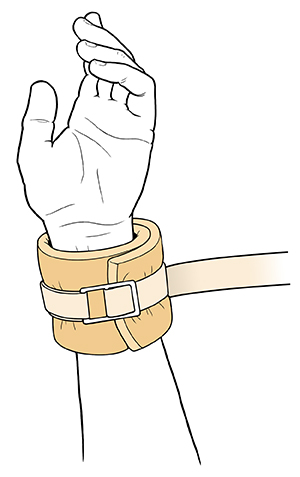 |
| Wrist restraints keep a patient from pulling tubes out. |
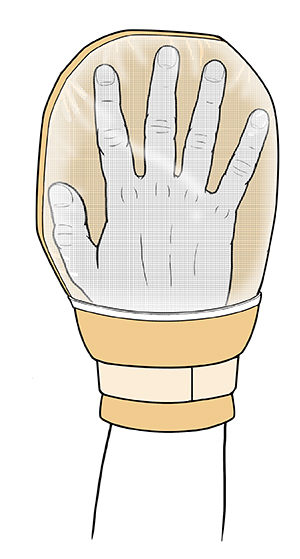 |
| Mitts prevent scratching at wounds or bandages. |
Why restraints are used
Some medicines or illnesses can cause confusion. A patient may not remember where they are or why they are there. Restraints help keep patients from harming themselves. Restraints can help prevent such things as:
-
Wandering out of a safe area.
-
Removing tubes or bandages.
-
Scratching at wounds or bandages.
-
Injuring themselves.
-
Injuring others.
How restraints are used
Many types of restraints are available. Each type has a purpose. Very strict guidelines say how a restraint can be used and for how long. Health care providers must:
-
Assess and document why the restraint is needed. They must follow current practices and guidelines.
-
Explain to the patient what is happening and why.
-
Use restraints only after all other methods have been tried. They must gather a team to apply the restraints.
-
Choose the restraint that limits movement the least.
-
Check the skin under the restraint often.
-
Keep a call button within the patient’s reach when a restraint is in place.
-
Remove the restraint as soon as it's no longer needed.
-
Preserve the patient’s dignity.
How you can help
-
Know that your loved one will be helped in doing everything they need. This includes eating, bathing, and using the toilet.
-
Don't hesitate to ask your loved one's care team about the restraints. Ask why they are used. Ask how long they will be needed.
-
Never remove restraints or loosen them yourself. Talk with your loved one's doctor if you have a concern.
Online Medical Reviewer:
Amy Finke RN BSN
Online Medical Reviewer:
L Renee Watson MSN RN
Online Medical Reviewer:
Sravani Chintapalli Researcher
Date Last Reviewed:
5/1/2025
© 2000-2026 The StayWell Company, LLC. All rights reserved. This information is not intended as a substitute for professional medical care. Always follow your healthcare professional's instructions.