Understanding Preeclampsia
Preeclampsia is a condition that can happen in pregnancy. It includes high blood pressure (hypertension), swelling, and signs of organ problems. It can show up as early as week 20 of pregnancy or as late as the postpartum period. It often goes away by 12 weeks after you give birth. It can lead to serious health risks for you and your baby. During your pregnancy, your healthcare provider will watch your blood pressure.
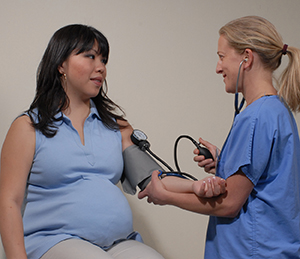 |
| Your blood pressure will be monitored regularly throughout your pregnancy to help check for preeclampsia. |
Dangers of preeclampsia
If not treated, preeclampsia can cause problems for you and your baby. The placenta is the organ that nourishes your baby. It may tear away from the wall of the uterus. This can put the baby at risk for health problems (fetal distress). It can put the baby at risk for preterm birth. Even though preeclampsia goes away in the days or weeks after birth, people who had preeclampsia are at higher lifetime risk for cardiovascular disease.
Preeclampsia can also cause these health problems:
Who’s at risk for preeclampsia?
No one knows what causes preeclampsia. It can happen to any pregnant person. But there are things that increase your risk. You may need to take a daily low dose of aspirin if you are at risk for preeclampsia.
You’re at higher risk for preeclampsia if you have any of these:
You’re at higher risk if any of these apply to you:
-
This is your first pregnancy
-
You are having twins or more
-
You’re under age 18 or over age 40
-
You used in vitro fertilization
-
You are Black
And you’re at higher risk if you had any of these in a past pregnancy:
Symptoms
A common symptom of preeclampsia is high blood pressure. Other symptoms may include:
-
Fast weight gain
-
Protein in your urine
-
Headache
-
Belly (abdominal) pain on your right side
-
Vision problems such as flashes or spots
-
Swelling (edema) in your face or hands (but this also often happens near the end of a normal pregnancy)
Tests you may have
Your healthcare provider will want to check your blood pressure. This will need to be done often in your pregnancy. If your blood pressure is high, you may have these tests:
-
Urine tests to look for protein
-
Blood tests to confirm preeclampsia
-
Fetal monitoring to make sure that your baby is healthy
Treating preeclampsia
Preeclampsia almost always ends soon after you give birth. Until then, your healthcare provider will help you manage it.
If your symptoms are mild, you may need to:
-
Limit your activity
-
Rest in bed
-
Not do heavy lifting
If your symptoms are severe, you will stay in the hospital. Treatment here may include:
-
Limits to your activity. This is to help control your blood pressure. You should not lift anything heavy. You will need to spend 8 hours a day lying down with your feet up.
-
Magnesium IV (intravenous) drip. This is done during labor. It's to prevent seizures
-
Induced labor or cesarean section. Preeclampsia most often goes away after you deliver the baby.
When to call your healthcare provider
Call your healthcare provider if your symptoms start quickly or are severe. This includes swelling, weight gain, or other symptoms. Some cases of preeclampsia are more severe than others. Your symptoms also may change or get worse as you get closer to your due date.
Once you give birth
In most cases, preeclampsia goes away on its own soon after you give birth. This is often by the 12th week after you deliver. Within days after you give birth, your blood pressure, swelling, and other symptoms should get better. But for some people, problems from preeclampsia can continue after birth.
Postpartum preeclampsia
Preeclampsia that starts after birth is rare. There are 2 types:
Both of these types are rare. But call your healthcare provider right away if you have symptoms of preeclampsia after you give birth.
When life issues affect your health
Many things in your daily life impact your health. This can include transportation, money problems, housing, access to food, and child care. If you can’t get to medical appointments, you may not receive the care you need. When money is tight, it may be difficult to pay for medicines. And living far from a grocery store can make it hard to buy healthy food.
If you have concerns in any of these or other areas, talk with your healthcare team. They may know of local resources to assist you. Or they may have a staff person who can help.