A
B
C
D
E
F
G
H
I
J
K
L
M
N
O
P
Q
R
S
T
U
V
W
X
Y
Z
Back to Intro
Click a letter to see a list of conditions beginning with that letter.
Click 'Back to Intro' to return to the beginning of this section.
Understanding Wound Separation After Surgery (Wound Dehiscence)
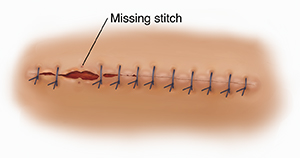
Wound dehiscence is when a surgical incision that has been stitched or stapled closed comes open again. This most often occurs with surgery done on the belly (abdomen).
-
Partial dehiscence is when only the outer (superficial) layers of tissue separate.
-
Complete dehiscence is when all layers of the wound tissue layers are separated. In this case, you may be able to see the underlying tissues and organs. Sometimes, organs can stick out of the opening.
How to say it
dee-HIHS-ihnts
How wound dehiscence happens
A wound can become separated when stress or tension overcomes the strength of the stitches or staples used to close the incision. This may happen from coughing, lifting, strenuous exercise, or other movements or actions. It can also occur if the wound was not closed correctly. It can also happen to wounds that don't heal correctly. This can occur in people who smoke or have certain chronic illnesses.
Symptoms of wound dehiscence
Symptoms of wound separation after surgery include:
-
Part or all of the wound is open
-
Staples or stitches are broken
-
Pain
-
Feeling of pulling or ripping like something popped
-
Drainage or bleeding from the wound, most often a clear to pink fluid
-
Signs of wound infection such as fever, redness, swelling, bad-smelling discharge, or chills
Treatment for wound dehiscence
Treatment for wound dehiscence depends on how large the opening is, whether there is infection, how soon the incision opened after the surgery, and whether you have other conditions that make it harder for the wound to heal. This might include diabetes, smoking, and poor nutrition.
Treatment includes:
-
Pain medicine
-
Antibiotics to treat infection
-
Surgery to remove dead or infected tissue (surgical debridement)
-
Wet-to-dry dressing. For this treatment, the wound is filled with a wet or moist gauze. Then it’s covered with a dry dressing. This helps the wound heal from the bottom up.
-
Vacuum-assisted closure of the wound. A wound vac uses air pressure to help the wound heal more quickly by pulling fluid out of the wound and helping new tissue to grow.
-
Additional surgery. In some cases, the surgeon makes another attempt to close the wound.
Your healthcare provider may refer you to specialists at a wound clinic for care. There you may see a wound care doctor or nurse who will help with bandaging, cleaning, and monitoring the wound.
Possible complications of a dehisced wound
Possible complications of wound dehiscence include:
When to call your healthcare provider
Call your healthcare provider if you have any of these:
-
Pain, redness, swelling, or bleeding that gets worse
-
Smelly fluid from the incision, or changes in color of the drainage from the incision
-
Fever of 100.4°F (38ºC) or higher, or as advised by your healthcare provider
-
Shaking or chills
-
Vomiting or nausea that doesn't go away
-
Numbness, coldness, or tingling around the incision
-
Changes in skin color around the incision
-
Opening of the wound
-
Stitches that pull apart
-
Staples that fall out
Online Medical Reviewer:
Heather M Trevino BSN RNC
Online Medical Reviewer:
Mahammad Juber MD
Online Medical Reviewer:
Marianne Fraser MSN RN
Date Last Reviewed:
8/1/2024
© 2000-2026 The StayWell Company, LLC. All rights reserved. This information is not intended as a substitute for professional medical care. Always follow your healthcare professional's instructions.